Locations in Heinävesi, Finland
Heinävesi is a small rural community in Eastern Finland. It’s known for its beautiful nature and for the water route which has been one of the best known national landscapes in Finland ever since it was chosen as the symbol of Finland for the world exposition 1895. Heinävesi is also known for its orthodox monastery Valamo and convent Lintula, the only ones in Western Europe.
By number of inhabitants, just a little over 3000, Heinävesi is small but as an area it’s rather large, 1319 km2. About 20 % of the area is covered by water. With little population and no noisy industry or flight routes Heinävesi is mostly very silent, which is one of its strengths when it comes to recordings in exterior milieus. Heinävesi has quite a rough topography with a lot of rocks, cliffs and boulders. Those elements together with numerous water routes are a key to the acoustic specialties of the area.
Heinävesi is a large area and it probably still has a lot of promising, unfound sweetspots but Heinäveden Muinaisseura ry has already over ten locations in its registers potential for open air studio activities.
Pilppa, Kolmiyhteinen
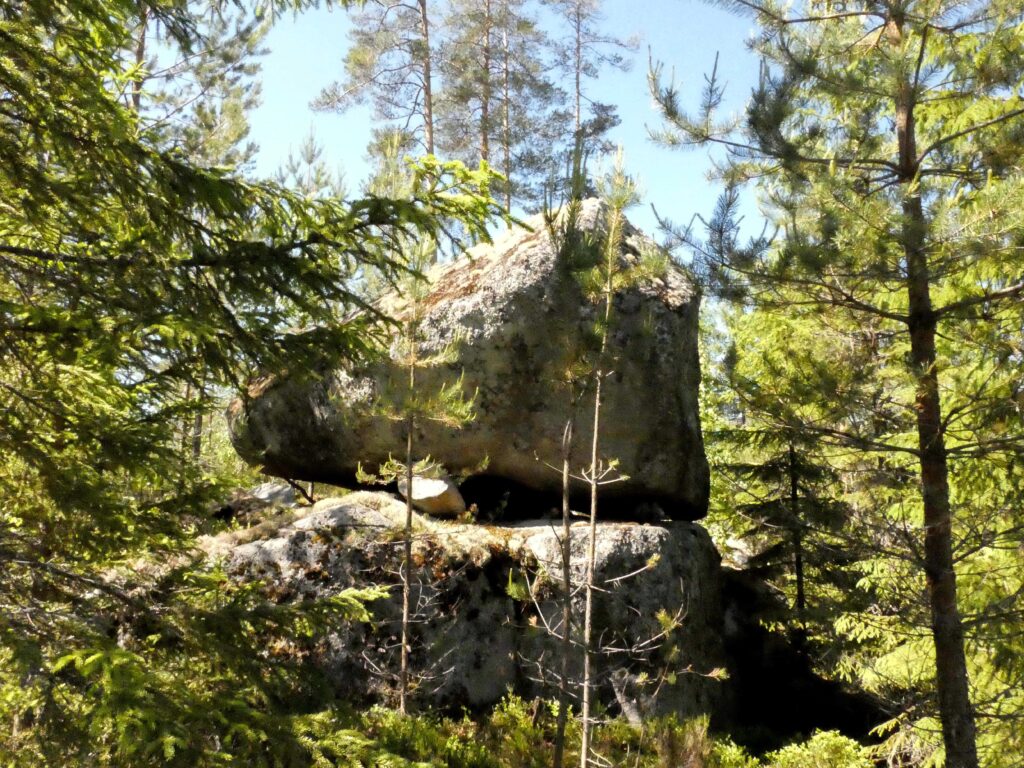
Pilppa is the northernmost spot of the Great Saimaa water pool. The forest around Kolovesi national park hides several locations with clear signs of stone age culture and special acoustic features. One of them is a pair of offering stones which have a clear acoustic corridor between them and a strong echo.
The bigger one of the stones also features a stomping stone, sort of an ancient version of a church bell. When stepped on it makes a strong stomping sound and if you look under it, you can see a complicated mechanism of several smaller stones which make it possible to move the rock in its place.
The offering stones are in an area which serves forest industry and therefore there’s a road which ends only about metres from the stones. There’s no traffic on the road but it makes logistics easy.

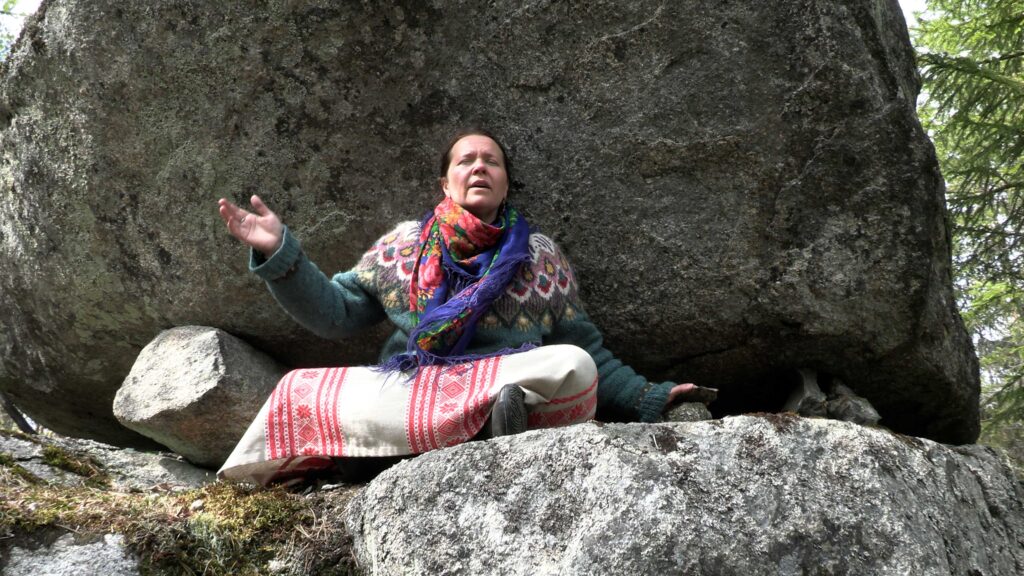
Pilppa, Vieruvuori
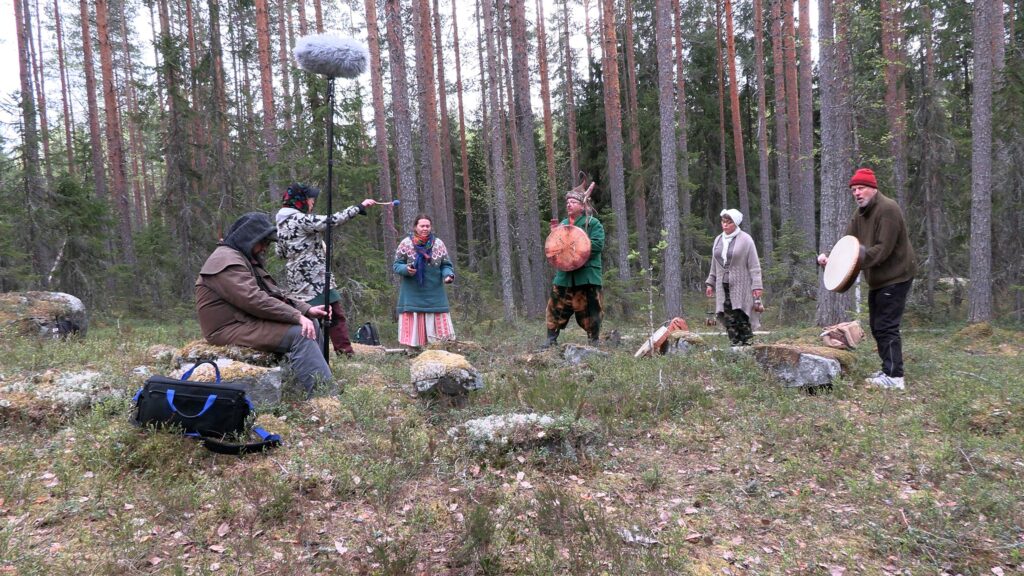
Close to the offering stones there’s also an ancient meeting place which is situated in an area which is a part of the Kolovesi national park. The meeting place features a stone table and four seats around it, facing North, East, South and West. Also, further from the table there are two stomping stones about 3-4 meters from stone in line with western and southern seat stone.
About 20 meters from the ”table group” there’s a larger circle of stones on top of a low rocky hill.
When you approach the meeting place from North-East direction you can find on the way three more stomping stones. Two of them are situated next to a boulder which looks like an altar – so accurately in the ends of the stones that it’s highly unlikely that they would be there naturally.
On the West cliff of Vieruvuori, about one kilometer away from the meeting place, there’s a large, about 4 meters wide rock painting by Ruokovesi lake and by the Heinävesi ship route.
All these elements indicate that the the stomping stones and rock formations probably mark an old ritual path.
Acoustically the area is quite typical forest with pines and spruces. The echo isn’t very strong but the ambience is pleasant and the silence makes it easy to record music and other sounds on the locations. The historical dimension with all stomping stones also makes the place inspiring.
Väntinkangas
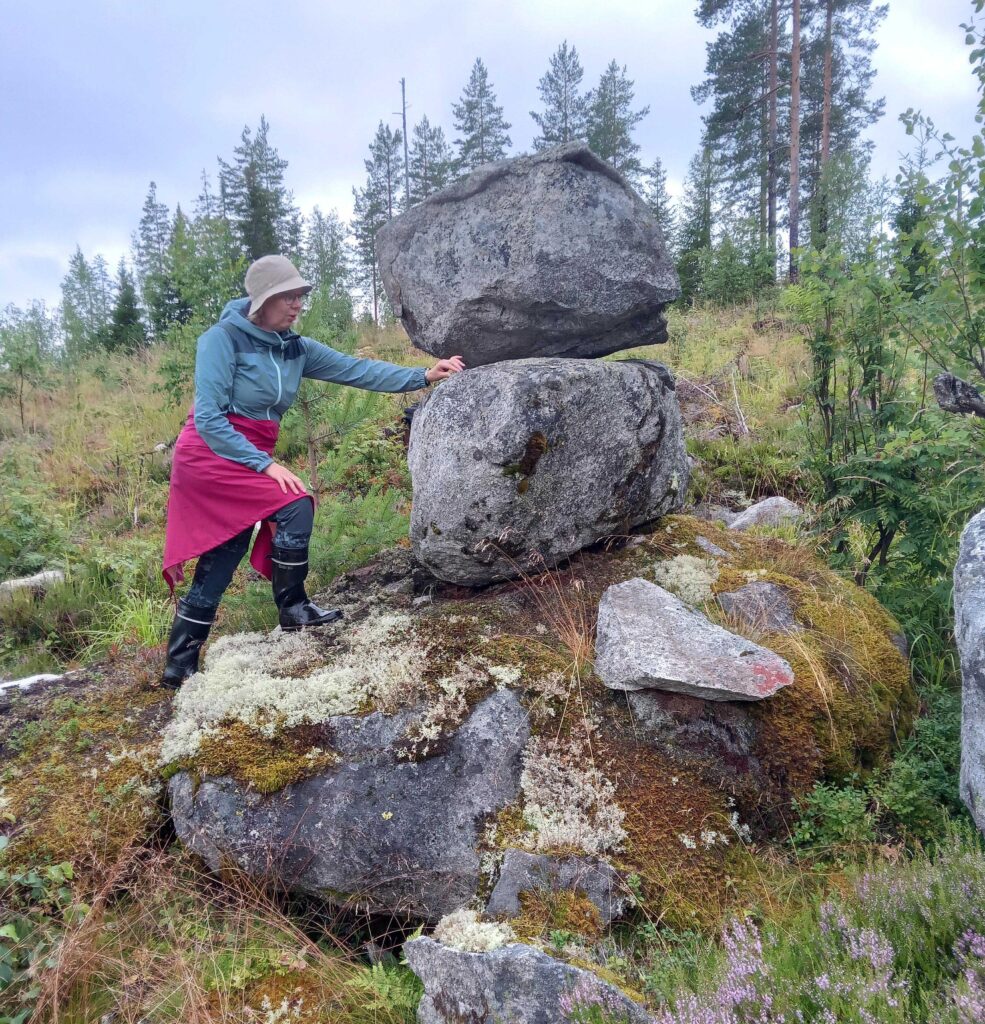
Väntinkangas close to the south border of Heinävesi has a unique, manmade structure with a history unknown. The structure features two boulders with perimeter a little over one metre on top of each other and on top of a flat, hollow rock plate. Although the boulders weigh several tons each, it requires quite little effort to make them both move, producing a low and loud rumbling sound which comes back as an echo from different directions in the environment.
Humalniemi

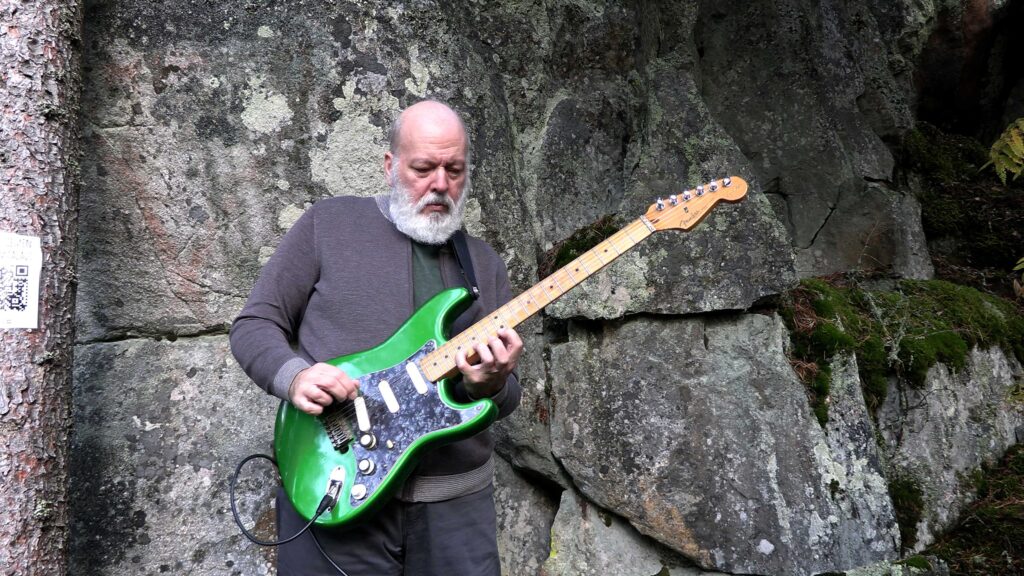
Humalniemi on the south shore of lake Iso-Vihtari is an acoustic treasure. In the middle of the cape there’s a rock formation which has a rock painting on the south wall. The echo by the painting is noticeably strong and right under the painting there’s also a stomping stone which can make the surroundings rumble.
On the north bank on Humalniemi there’s a place named Jumppasen luola, the cave of Jumppanen. The name refers to the last inhabitant of the cave, the last person to pay lapinvero, lapp tax, which was collected from those whose livelihood was based on hunting and gathering. According to the church registers Jumppanen moved from Heinävesi to Inari, to Northern Lapland, where he’s still known in the oral tradition as a powerful witch.
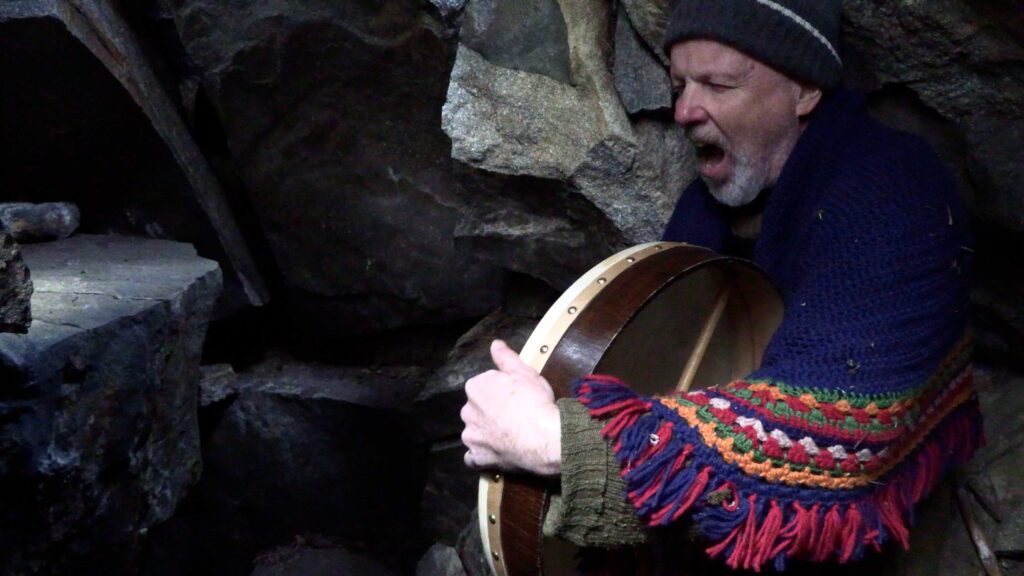
There’s also an interesting fact the same name, Jumppanen, is also featured in Savonian versions of poems the Karelian versions of which were made widely known in the national epic Kalevala. In the Savonian version, Jumppanen or Jompanen is the same character who in the official version of Kalevala is called Joukahainen.

Even without knowing anything about Jumppanen himself, the cave named after him is a fascinating place. It’s a naturally formed well which goes about five metres inside the steady rock and then opens to several chambers down below. If there’s someone singing with a low voice inside the cave, you can hear the whole rock resonate outside.
Although Humalniemi is literally in the middle of a forest, several kilometres away from the closest houses, it’s easy to reach because there’s a harvester road which is just 10 metres away from the rock painting and about 100 metres from the cave.
Kytöjoki area
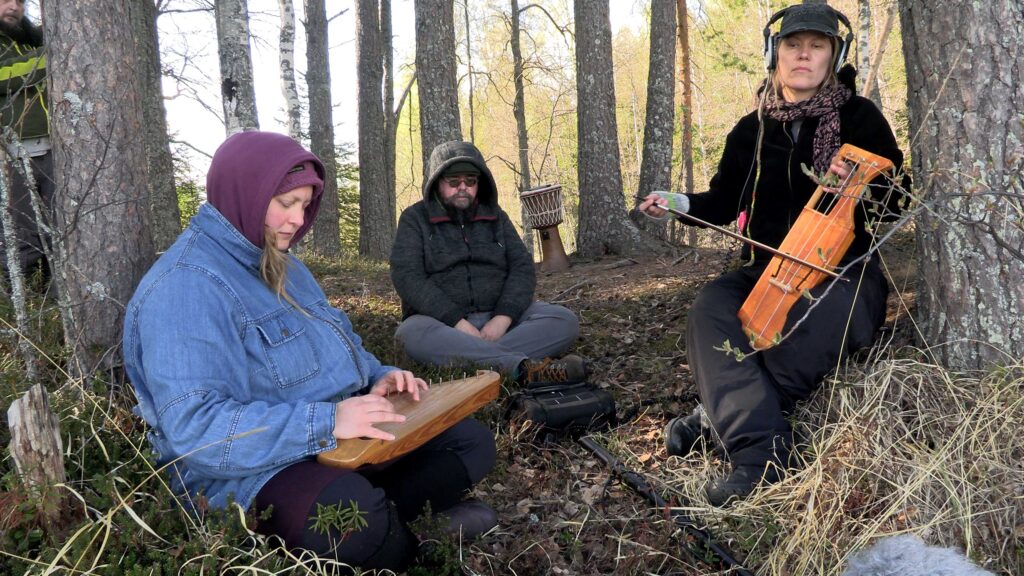
Kytöjoki is an interesting place both from an archeological and acoustic point of view. By the sources of Kytöjoki river there’s a narrow cape named Hiekkaniemi (sandy cape) which has been inhabited already in the stone age which was noticed a year ago when Heinäveden Muinaisseura ry found four stone age dwelling places in the end of the cape and a series of hunting pits on a small island opposite to the cape just about 20 metres away.
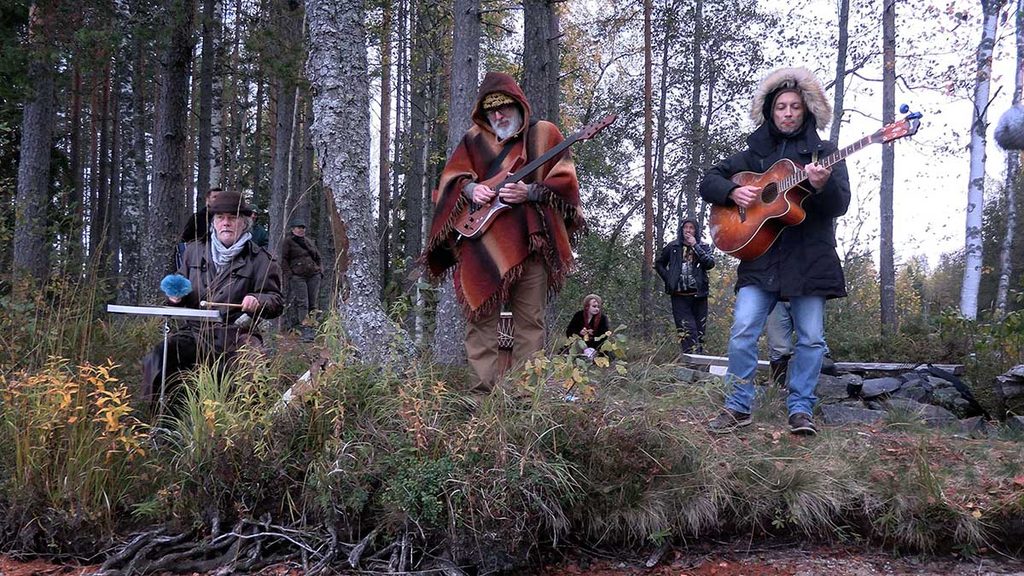
In addition to the archeological dimension, Hiekkaniemi also has unique acoustic features. In the end of the cape there’s a spot where a human voice bounces at least 5-6 times from different directions.
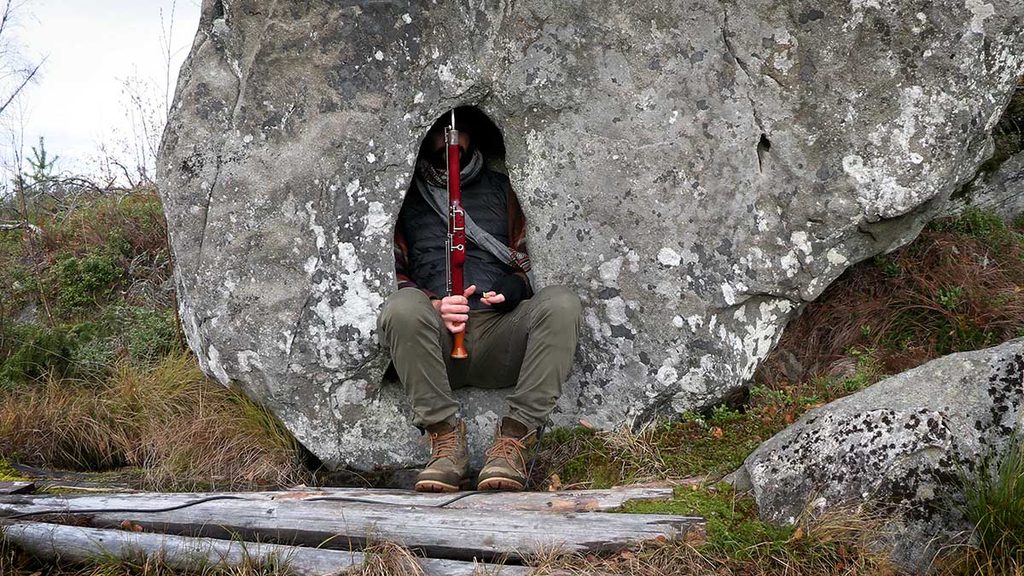
Close to Hiekkaniemi there’s also a tafone, a hole formed by thousand years of erosion on the side of a boulder. The tafone is big enough for an adult – or even two small adults to sit in – and it creates a special, isolated acoustic space in which you start to hear your own heartbeat if you sit there for a while.

About 200 metres from the tafone there’s also a rock painting which was found last spring by Heinäveden Muinaisseura ry. The technique and material of the painting refers to stone age but the figure – a hexagon – is confusingly modern which makes the age of the painting unknown. Despite that open question the echo by the painting is really strong which is a common feature when it comes to rock paintings in general.
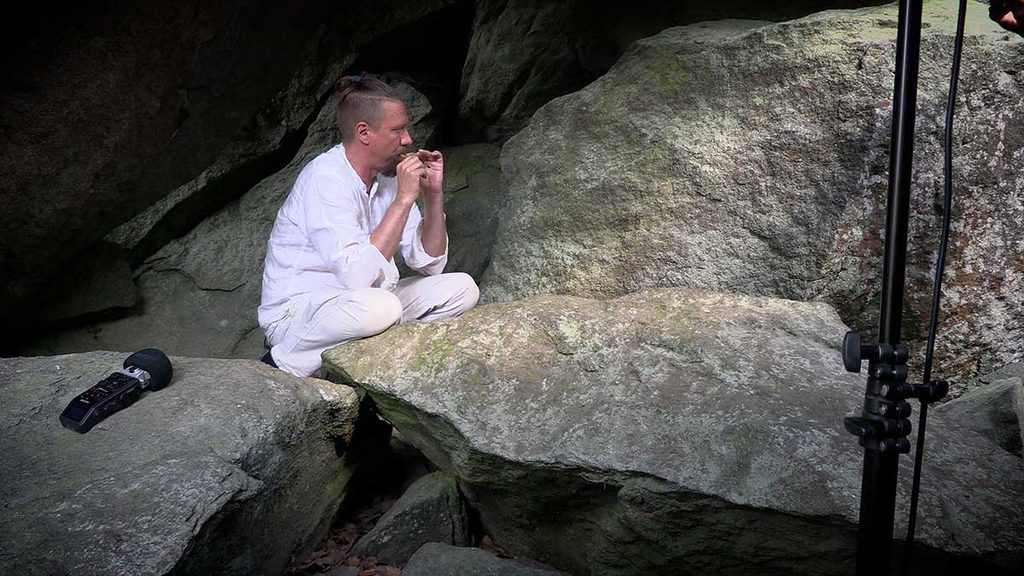
A few kilometres away from the tafone and Hiekkaniemi there’s a hill named Jouhtenisenvuori – the mountain of a swan – which has clearly been a sacred place for the tribes inhabiting the area. On the top of the mountain in the old forest you can find several stomping stones and a circle of stones which refer to a meeting place.

According to locals the echo on lake Levänen next to Jouhtenisenvuori is impressive and unique.
About three kilometres south of Jouhtenisenvuori there’s another mountain named Polvilammenvuori. It has a stiff cliff, about 50 metres high which features a cave with a stone age quartz mine. The echo in front of the cliff is incredibly strong and perfect for recording.
Harvavuori

Harvavuori by the Harvalahti bay at the west end of lake Kermajärvi is a cliff formation with a straight stone wall about 30 metres high and more than 100 metres wide. The straight wall produces a strong and clear and on the shore of the opposite island you can hear your own voice coming back to you loud and clear with less than half a second delay.
The original name of Harvavuori is not known but the other names of the area refer to a vital history. Opposite to Harvavuori, on the northside of Harvalahti bay there’s a small bay named Ukonlahti, the bay of Ukko. That refers to the highest divinity of the ancient Finnish nature religions and it even indicates that the place could be a location of Ukonvakat, an annual celebration for the glory of Ukko.
Kermanranta
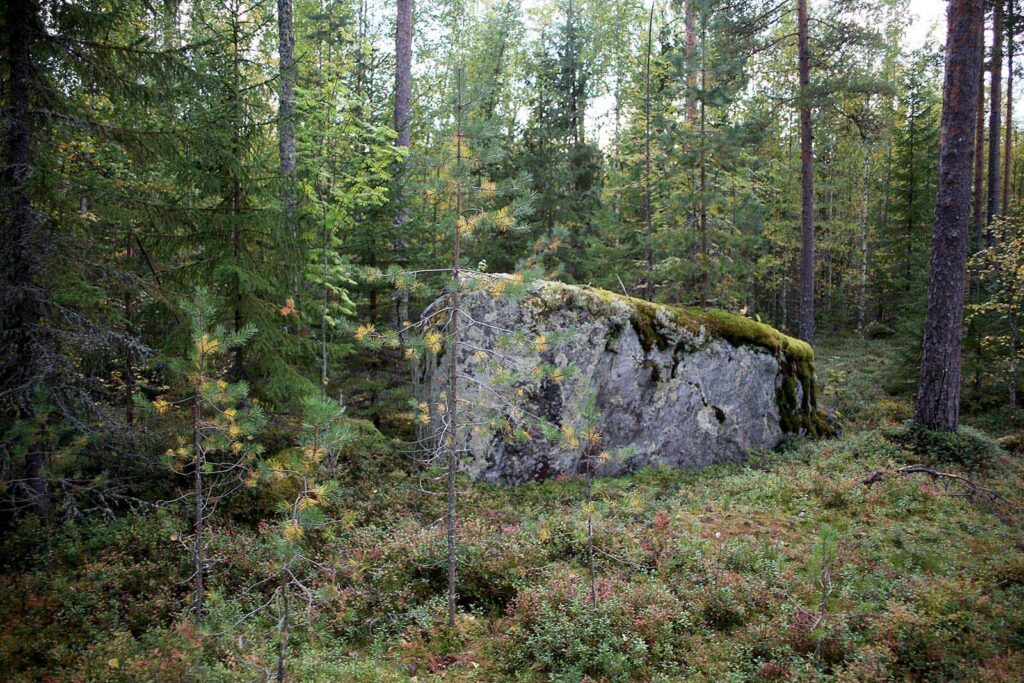
Kermanranta, the south bank of lake Kermajärvi by the centre of Heinävesi is the home of Heinävesi harbour but there are also signs of a much older civilization at the area. About 200 metres away from the harbour in the forest there’s a natural square in an old forest which seems to have been an old ritual place. It has a chain of boulders and at least two stomping stones – and also perfect acoustics thanks to the surrounding trees and a cliff on the other side.
Close to the ritual place there’s also a big boulder on top of a chain of rock. That boulder is special because it has a clear, naturally formed face on the lake side and the eyes of the face look straight to island Hoikansaari to opposite side of lake Kermajärvi where there’s a bronze age grave, one of the most important archeological findings at the region. It hasn’t been studied, yet, whether there’s also an acoustic connection between these places.
Kurikkalahti
A few hundred meters from Kermanranta ritual place there’s a bay named Kurikkalahti. The shores of Kurikkalahti have interesting acoustic spots and that’s actually the place where the idea of Echoes of the Ancient was born.
The bay is at the widest about 150 meters from Kermanranta to the tip of cape Kurikkaniemi and it gets more narrow down to about 40 meters at the furthest points of Kurikkalahti.
The topography makes the sound act in strange ways. Sound waves move freely on top of water and and trees and cliffs of Kurikkaniemi give back a multilayered echo.
Locations on a map
On Google My Maps:
https://www.google.com/maps/d/u/3/edit?mid=1B6BModZhOaA3sQcSkwh5wYjgjGPm6xE&usp=sharing